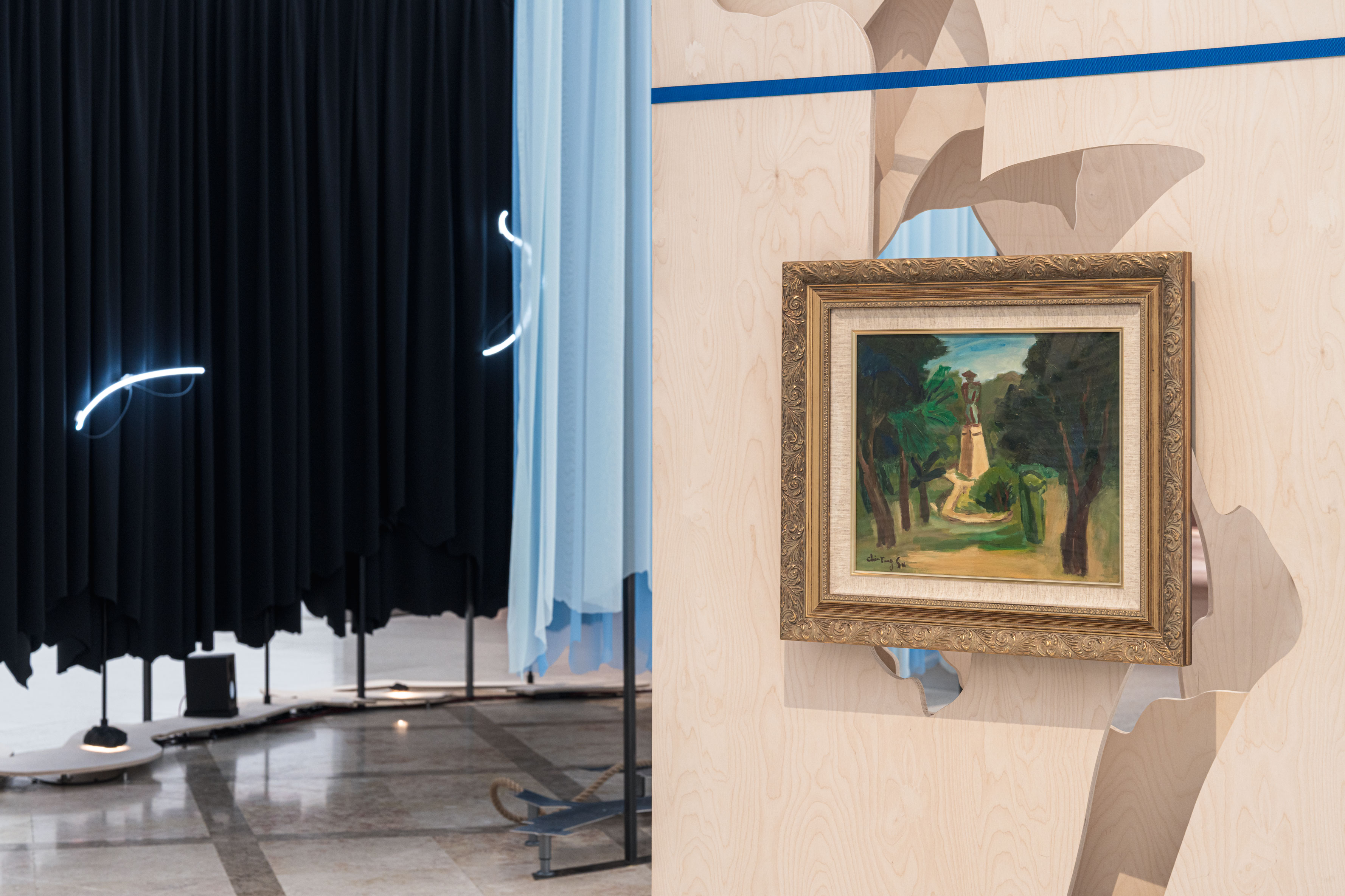
蘇秋東 《基隆驛前》
蘇秋東長年生活於基隆,港口、車站與城市街景持續成為他的繪畫題材。《基隆驛前》描繪昔日基隆車站前的城市景觀。藝術家以強勁而概括的筆觸組織畫面,深綠、藍綠與褐色層層堆疊,樹木、道路與紀念碑被轉化為厚實的色塊與形體,使具體地景帶有鮮明的繪畫性。
畫面中央的雕像與台座,也是辨識城市變遷的重要線索。日治時期,基隆驛前曾設置第一任臺灣總督樺山資紀銅像;戰後隨政權更迭,原有空間改置蔣介石銅像。隨著近年的都市改造,銅像與台座皆已撤除,昔日圓環轉變為今日的國門廣場。
從殖民時期的紀念碑、戰後政治象徵到當代公共空間,同一地點持續改變其形貌與意義。《基隆驛前》以濃厚的筆觸保存一個特定時期的城市景觀,也使繪畫成為觀看基隆空間與歷史變遷的視覺切面。
Su Chiu-Tung, In Front of Keelung Station
Su Chiu-Tung lived in Keelung for many years, and its port, train station, and streetscapes remained recurring subjects in his painting. In Front of Keelung Station depicts the cityscape that once stood before the old Keelung train station. The artist organizes the scene with forceful, broad brushwork; dark green, blue-green, and brown are layered over one another, and the trees, road, and monument are turned into dense blocks of color and form, giving this concrete landscape a pronounced painterly quality.
The statue and pedestal at the center of the painting are also an important clue to the city's changes. During the Japanese colonial period, a bronze statue of Kabayama Sukenori, Taiwan's first Governor-General, once stood in front of Keelung Station; after the war, with the change of regime, it was replaced with a statue of Chiang Kai-shek. Following recent urban redevelopment, both the statue and its pedestal have been removed, and the former traffic circle has become today's National Gate Plaza.
From a colonial-era monument, to a postwar political symbol, to a contemporary public space, the same site has continually changed in form and meaning. In Front of Keelung Station preserves, in heavy brushwork, the cityscape of one particular period, making the painting a visual cross-section through which to view Keelung's changing space and history.
蘇秋東 《昔日顏家花園》
蘇秋東《昔日顏家花園》描繪基隆顏家「陋園」的一景。透過秋惠文庫保存的歷史照片與作品比對,可以推測畫面取景自園內帶有西式庭園語彙的區域。人體雕像與台座位於中央,園徑向內延伸,四周由花木與植栽包覆。蘇秋東以濃厚而直接的筆觸組織景物,綠、藍綠與黃綠相互堆疊,明亮的雕像與土黃色園徑從深色植物間浮現,使庭園在具體景物之外,也呈現色彩、光線與筆觸構成的空間感。
1918年,經營礦業的基隆顏家取得陋園並加以整建,園區融合日式與西式庭園形式,亦成為地方仕紳與藝文人士往來的重要場所。顏家長期支持藝術活動,曾贊助雕塑家黃土水,黃土水並於1928至1929年間為顏國年創作《顏國年雕像》,現典藏於臺北市立美術館。與顏家具有姻親關係的倪蔣懷,以及活躍於基隆公會堂等文化場域的藝術家,共同形成近代基隆重要的藝文網絡。
今日陋園多數景觀已消失,秋惠文庫的檔案與蘇秋東的繪畫遂彼此參照,讓花園的空間形貌、藝術家的感知,以及基隆礦業、仕紳文化與藝術贊助交織而成的文化風景,再次進入今日的觀看。
Su Chiu-Tung, The Yen Family's LòuyuánAs It Once Was
Su Chiu-Tung's The Yen Family's Lòuyuán, As It Once Was depicts a corner of Lòuyuán, the garden of Keelung's Yen family. Comparing the painting with historical photographs preserved in the Formosa Vintage Museum Cafe archive, the scene can be identified as an area of the garden built in a Western landscape idiom. A human figure sculpture on its pedestal stands at the center, with a garden path extending inward, enclosed on all sides by trees and plantings. Su organizes the scene with heavy, direct brushwork, layering green, blue-green, and yellow-green; the bright sculpture and the ochre path emerge from the dark foliage, so that beyond its depiction of specific things, the garden also takes on a sense of space built from color, light, and brushwork.
In 1918, the Yen family of Keelung, whose fortune came from mining, acquired Lòuyuán and had it renovated. The garden combined Japanese and Western landscape forms and became an important gathering place for local gentry and cultural figures. The Yen family were longtime patrons of the arts and once supported the sculptor Huang Tu-shui, who created a portrait sculpture of Yen Kuo-nien for the family between 1928 and 1929; it is now held in the Taipei Fine Arts Museum. Ni Chiang-huai, related to the Yen family by marriage, together with artists active at venues such as Keelung Public Hall, formed an important artistic network in early modern Keelung.
Most of Lòuyuán's original scenery no longer exists today. The Formosa Vintage Museum Cafe's archival photographs and Su Chiu-Tung's painting thus come to reference one another, bringing the garden's spatial form, the artist's perception of it, and the cultural landscape woven from Keelung's mining industry, gentry culture, and art patronage back into view today.
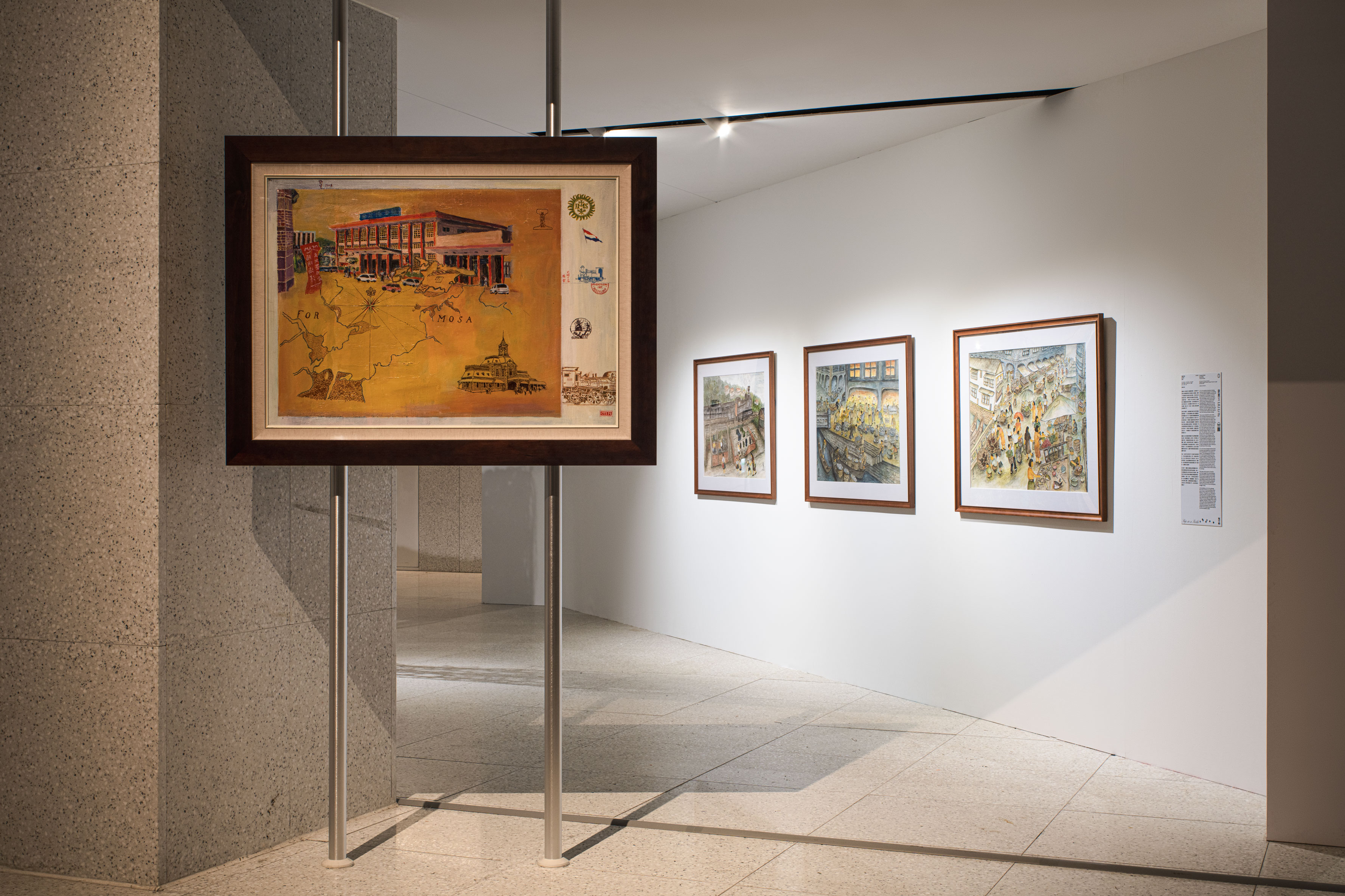
李欽賢 《基隆驛史記》
李欽賢的《基隆驛史記》以拼貼式構圖串連基隆車站不同時期的城市記憶。歷代站體建築、火車、地圖、航線與城市符號共同出現在畫面中,右側鑲嵌不同年代的旗幟,使不同時期的歷史線索彼此交錯。明亮的黃色基調與近似手繪圖誌的表現方式,讓建築、地理與文字共同構成一幅富有敘事感的城市記憶地圖。
基隆車站的發展與臺灣近代交通史密切相連。自清治時期臺灣興築鐵路以來,基隆即因港口位置成為重要的交通節點;隨著築港、鐵路與城市建設持續發展,車站長期承接人口移動、物資運輸與地方產業的變化。畫面中的火車也帶出都市現代化的歷史感,串連城市不同階段的發展。
畫面上方港口輪廓般的地圖圖像,進一步呈現車站與海港之間緊密的空間關係。港灣如同城市的地理底圖,一端連接海上航線,一端透過鐵路延伸至島嶼內部。李欽賢將不同年代的建築、交通與政治符號重新拼貼,使時間在畫面中層層交疊,也讓基隆作為人流與物流通運節點的歷史,形成一幅跨越時代的港都景象。
Lee Chin-Hsien, Annals of Keelung Station
Lee Chin-Hsien's Annals of Keelung Station links together different periods of Keelung Station's urban memory through a collage-like composition. Station buildings from different eras, trains, maps, shipping routes, and urban symbols appear together on the picture surface, with flags from different periods inlaid along the right side, so that historical threads from different times cross one another. A bright yellow tonality and a rendering style close to hand-drawn illustration bring architecture, geography, and text together into a narrative map of urban memory.
Keelung Station's development is closely tied to the history of modern transportation in Taiwan. Since the Qing dynasty first built railways in Taiwan, Keelung, by virtue of its port location, became an important transportation node; as harbor construction, railways, and urban infrastructure continued to develop, the station long absorbed the movement of population, the transport of goods, and shifts in local industry. The trains in the painting also carry a sense of the history of urban modernization, linking the city's different stages of development.
The port-outline map-like image above further reveals the close spatial relationship between the station and the harbor. The harbor functions like the city's geographic base map, connecting on one side to sea routes and, on the other, extending inland by rail. By recollaging architecture, transportation, and political symbols from different eras, Lee makes time layer upon itself within the picture, forming, out of Keelung's history as a node for the movement of people and goods, a portrait of the port city that spans different ages.
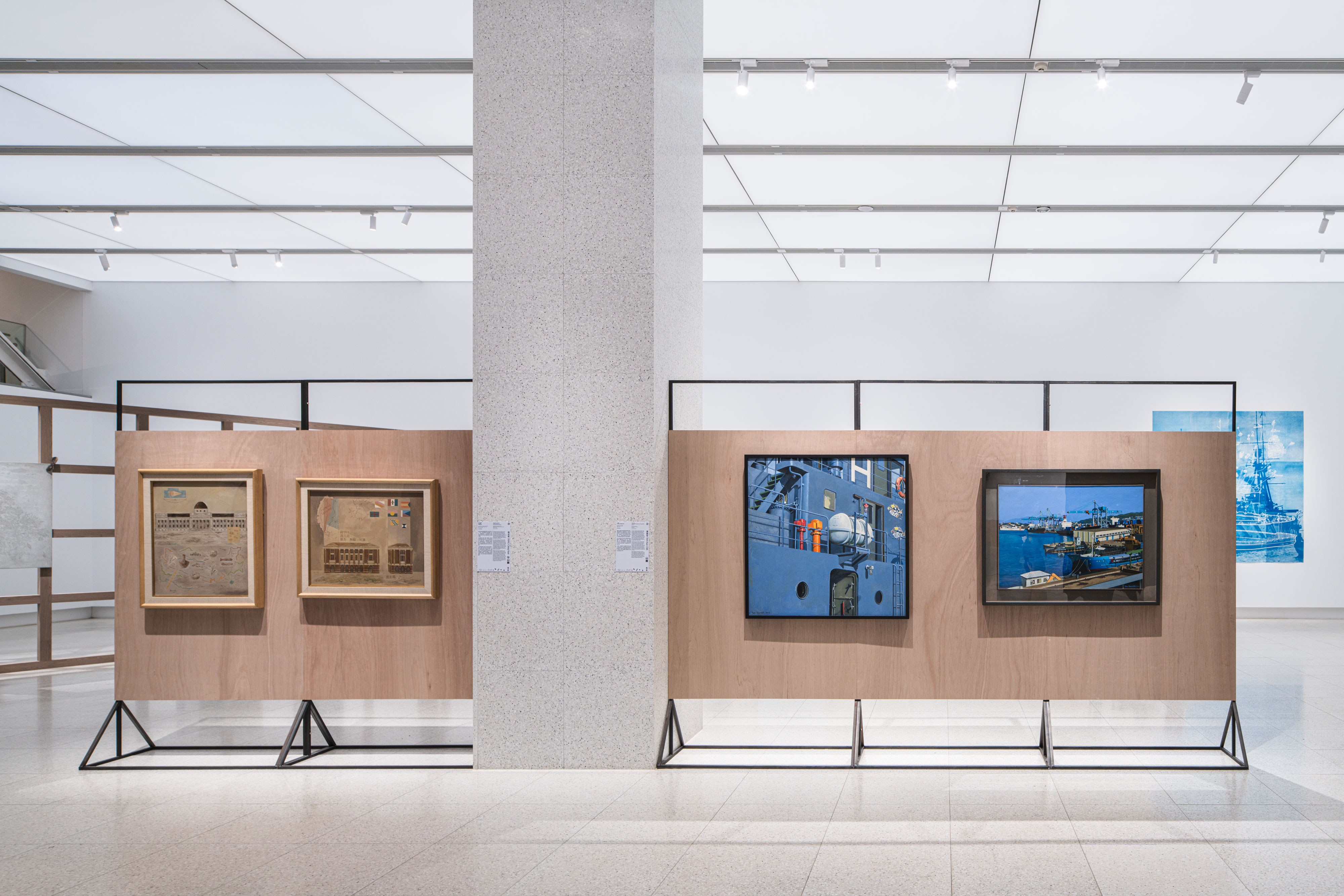
楊成愿 《基隆招商局》、《近代建築》、《航行與時間》
基隆長期是楊成愿觀看與創作的重要場域。自1980年代末起,港口、砲台、城市建築與地方地景持續進入其作品,《基隆招商局》、《近代建築》與《航行與時間》即從不同面向回應這座港口城市的歷史經驗。
作品將建築、船舶、地圖、幾何圖示、礦石與近似自然標本的物件並置,使不同時間與空間在同一畫面中交會。《基隆招商局》帶出航運、商業與港埠發展;《近代建築》連結城市現代化與公共建築記憶;《航行與時間》則以船舶、航海圖像與符號延伸港口與外部世界的關係。
不同物質與圖像在畫面中形成新的象徵關係。建築、船艦、礦石與地圖分別承載城市、產業、航運與空間知識,也讓基隆不以單一景觀被呈現,而成為多重時間與歷史線索彼此交錯的視覺場域。這種非線性的組織方式,也回應本展對歷史的閱讀:不同時代與觀看位置被重新疊置,使地方記憶在圖像之間持續展開新的關係。
YANG Cheng-Yuan, China Merchants, Keelung, Modern Architecture, Navigation and Time
Keelung has long been an important site for Yang Cheng-Yuan's looking and picture-making. Since the late 1980s, ports, fortresses, urban architecture, and local landscape have continually entered his work; China Merchants, Keelung, Modern Architecture, and Navigation and Time each respond, from a different angle, to this port city's historical experience.
The works juxtapose architecture, ships, maps, geometric diagrams, minerals, and objects resembling natural specimens, letting different times and spaces meet within a single picture. China Merchants, Keelung draws out shipping, commerce, and harbor development; Modern Architecture links urban modernization to the memory of public buildings; Navigation and Time extends, through ships, navigational imagery, and symbols, the relationship between the port and the world beyond it.
Different materials and images form new symbolic relationships within the picture. Architecture, warships, minerals, and maps each carry the city, industry, shipping, and spatial knowledge, so that Keelung is presented not as a single view but as a visual field where multiple layers of time and historical clues cross one another. This non-linear way of organizing material also echoes this exhibition's approach to history: different eras and viewpoints are layered anew, so that local memory keeps opening new relationships among the images.
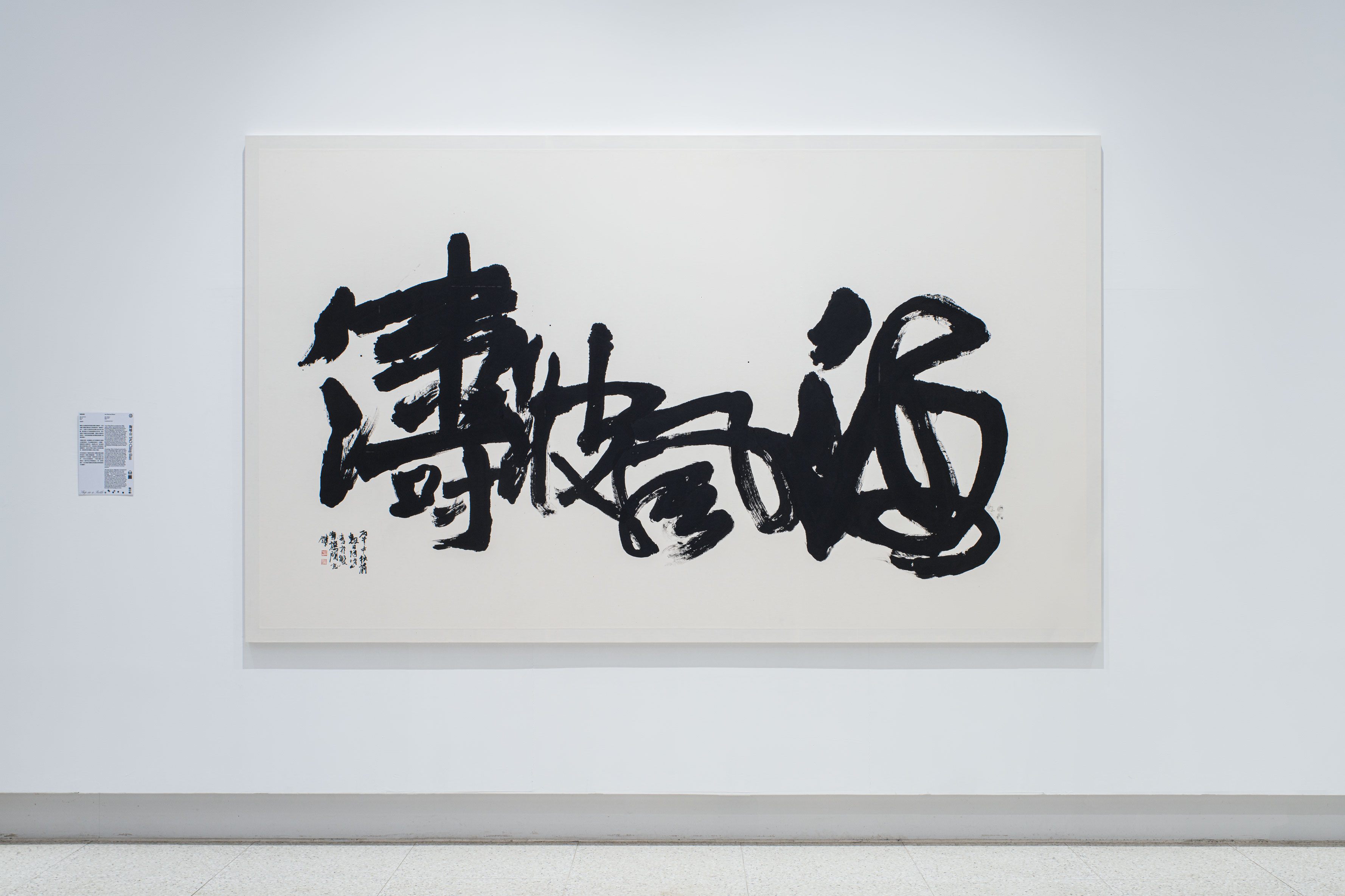
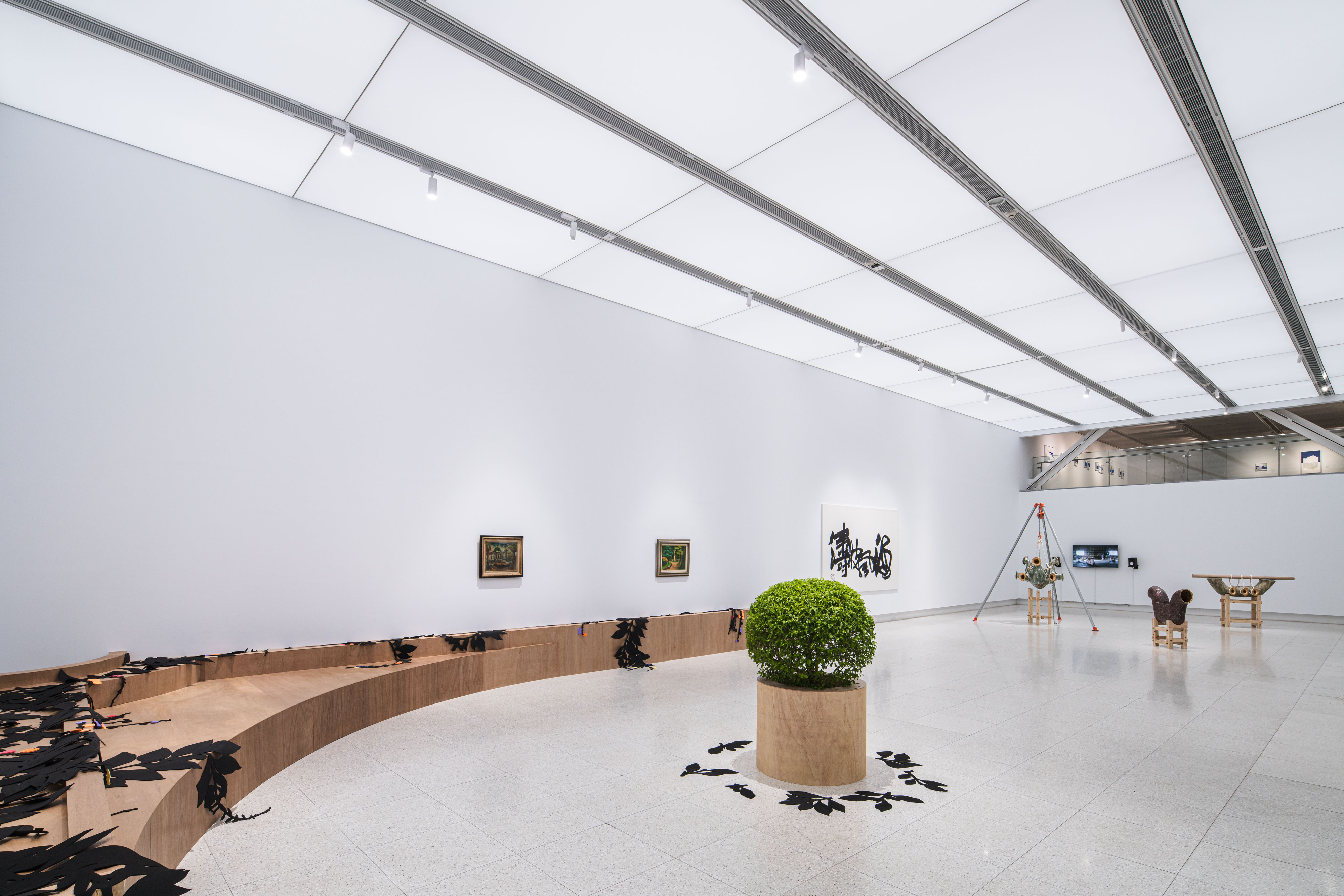
陶晴山《暖溪見晴》《海風波濤》
陶晴山為基隆重要書畫家與藝文推動者,自幼承襲父親陶芸樓的詩文與書畫家學,後師從江兆申,長期以水墨與書法記錄自然及地方經驗。陶芸樓1947年抵達基隆後定居於此,曾任基隆市文獻委員會特約編纂、基隆市美術研究會會長,其詩書畫實踐亦參與戰後基隆藝文環境的發展。
《暖溪見情》回到陶晴山青年時期經常出遊寫生的暖東峽谷。作品描繪雨後溪谷,以皴擦、積墨與留白組構奇岩、溪流與山林,淡青綠與赭色穿插於墨色之間,呈現雨後水氣與植被的濕潤層次。地景在筆墨中連結不同時間的觀看,使寫景同時承載個人的地方記憶。
本次委託的大尺幅書法則取父親陶芸樓為基隆所作詩句「海風天際撼波濤」,將父輩的文字重新帶回今日的港都。從暖東溪谷到港口海洋,一件由自身記憶寫景,一件循父親詩文書寫地方,兩件作品以筆墨連結山、海、家學與城市,也呈現兩代藝術家與基隆長時間累積的文化關係。
Tao Ching-Shan, Nuandong, Where Feeling Reveals Itself and Sea Wind and Waves
Tao Ching-Shan is an important calligrapher, painter, and cultural advocate in Keelung. From childhood he inherited the poetry, calligraphy, and painting passed down from his father, Tao Yun-Lou, and later studied under Chiang Chao-Shen, working for decades in ink painting and calligraphy to record nature and local experience. Tao Yun-Lou settled in Keelung after arriving in 1947, serving as a contracted compiler for the Keelung City Archives Committee and as chairman of the Keelung City Fine Arts Research Association; his practice in poetry, calligraphy, and painting was itself part of the development of Keelung's postwar cultural life.
Nuandong, Where Feeling Reveals Itself returns to Nuandong Gorge, a place Tao often visited to sketch from life in his youth. The work depicts the valley after rain, building its strange rocks, streams, and forested hills through texturing strokes, pooled ink, and passages of blank space; pale blue-green and ochre are threaded through the ink, conveying the damp, layered atmosphere left by moisture and vegetation after rain. Within the brushwork, the landscape links different moments of looking, so that depicting a scene also carries the artist's own local memory.
The large-format calligraphy commissioned for this exhibition takes as its text a line his father, Tao Yun-Lou, once wrote for Keelung — "Sea wind on the horizon shakes the rolling waves" — bringing the father's words back into today's port city. From the valley at Nuandong to the sea at the harbor, one work paints a scene from the artist's own memory, the other writes the place through his father's verse; together, the two works use brush and ink to connect mountain, sea, family learning, and city, tracing the cultural relationship that two generations of artists have built with Keelung over time.
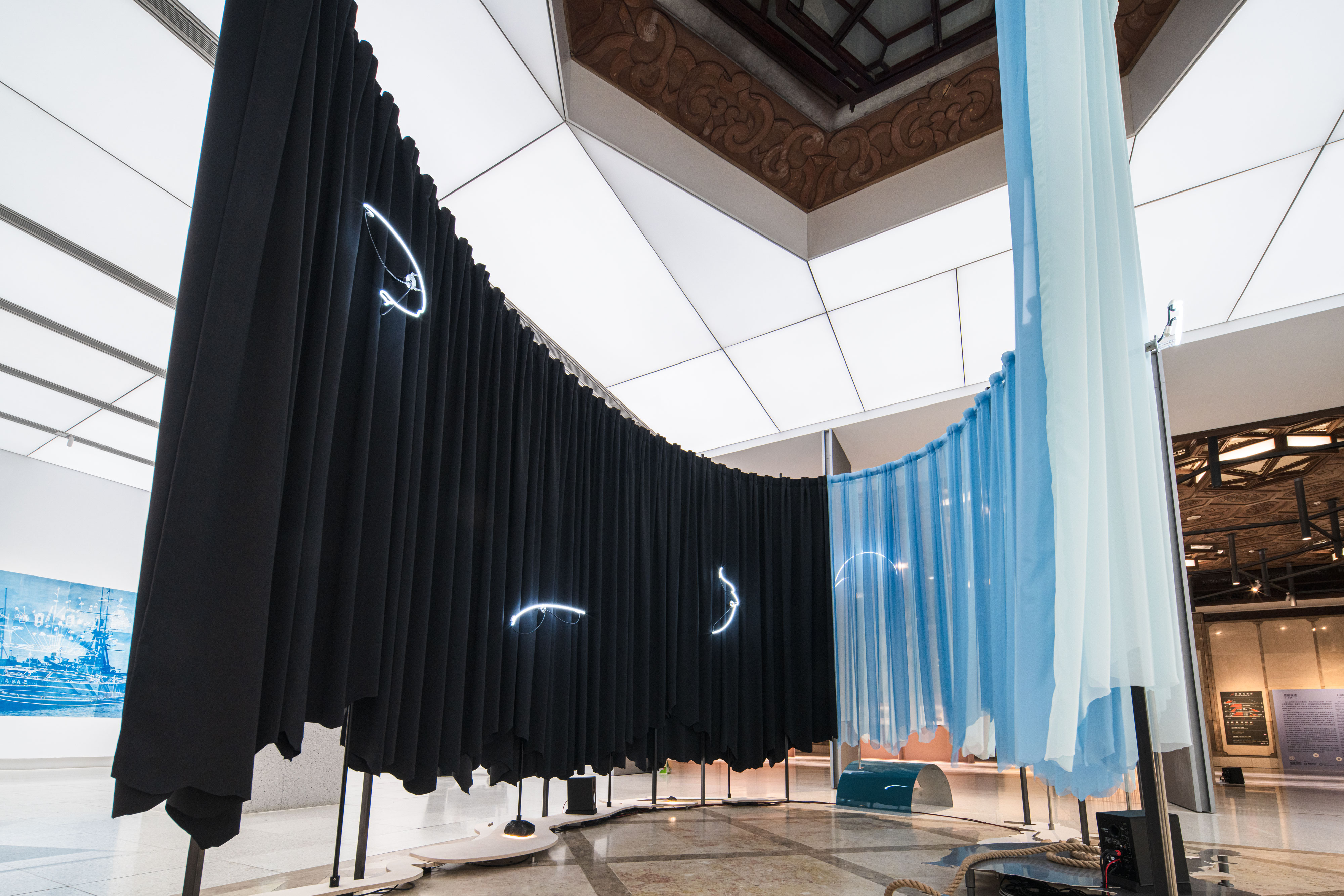
周代焌 《疊景》
周代焌長期以繪畫與裝置探討圖像、地景與空間之間的關係,擅長將不同來源的視覺材料拆解為圖層,透過覆蓋、錯置與並置重新組構,使不同時間與空間的圖像共存於同一畫面。
本次創作以館藏作品為起點,從不同年代藝術家觀看基隆的方式展開交錯閱讀。蘇秋東《航行與時間》中的水體與移動、李義弘《跳石海岸》的海景與自然地貌、洪瑞麟《礦工》所承載的礦業經驗,以及蘇秋東《基隆驛前》留下的城市景觀與地方記憶,成為藝術家重新組織基隆的視覺線索。
周代焌進一步從構圖、色彩、筆觸、造型與視點等繪畫形式出發,將平面的圖像疊層轉化為空間疊層。展場造型以基隆港輪廓為基礎,並結合和平島等高線等地形語彙,使線條、色塊與筆觸轉化為牆體、物件與材質關係。
「繪畫回應繪畫」構成本次創作的核心方法。典藏中的圖像、筆觸與觀看方式經由拆解與轉譯,重新組織為整體空間語彙,使分屬不同年代的基隆地景、產業與城市記憶在展場中建立新的視覺關係。
Chou Tai-Chun, Layered Views
Chou Tai-Chun has long used painting and installation to explore the relationships among image, landscape, and space, skilled at breaking visual material from different sources down into layers and reassembling them through overlay, dislocation, and juxtaposition, so that images from different times and spaces coexist within a single picture.
This work takes the museum's collection as its starting point, opening an interwoven reading across the ways artists from different eras have looked at Keelung. The water and movement in Yang Cheng-Yuan's Navigation and Time, the seascape and natural terrain of Lee Yih-Hong's Rocky Coast, the mining experience carried in Hung Jui-Lin's Miner, and the cityscape and local memory preserved in Su Chiu-Tung's In Front of Keelung Station all become visual clues for the artist's reorganization of Keelung.
Chou further moves from painterly forms — composition, color, brushwork, form, and viewpoint — transforming layers of flat image into layers of space. The exhibition's spatial design takes the outline of Keelung Harbor as its base, combined with the contour lines of Heping Island and other geographic vocabulary, so that line, color block, and brushwork are translated into wall, object, and material relationships.
"Painting responding to painting" forms the core method of this work. Images, brushwork, and ways of seeing drawn from the collection are broken down and translated, then reorganized into an overall spatial vocabulary, letting the landscapes, industries, and urban memories of Keelung from different eras build new visual relationships within the exhibition space.
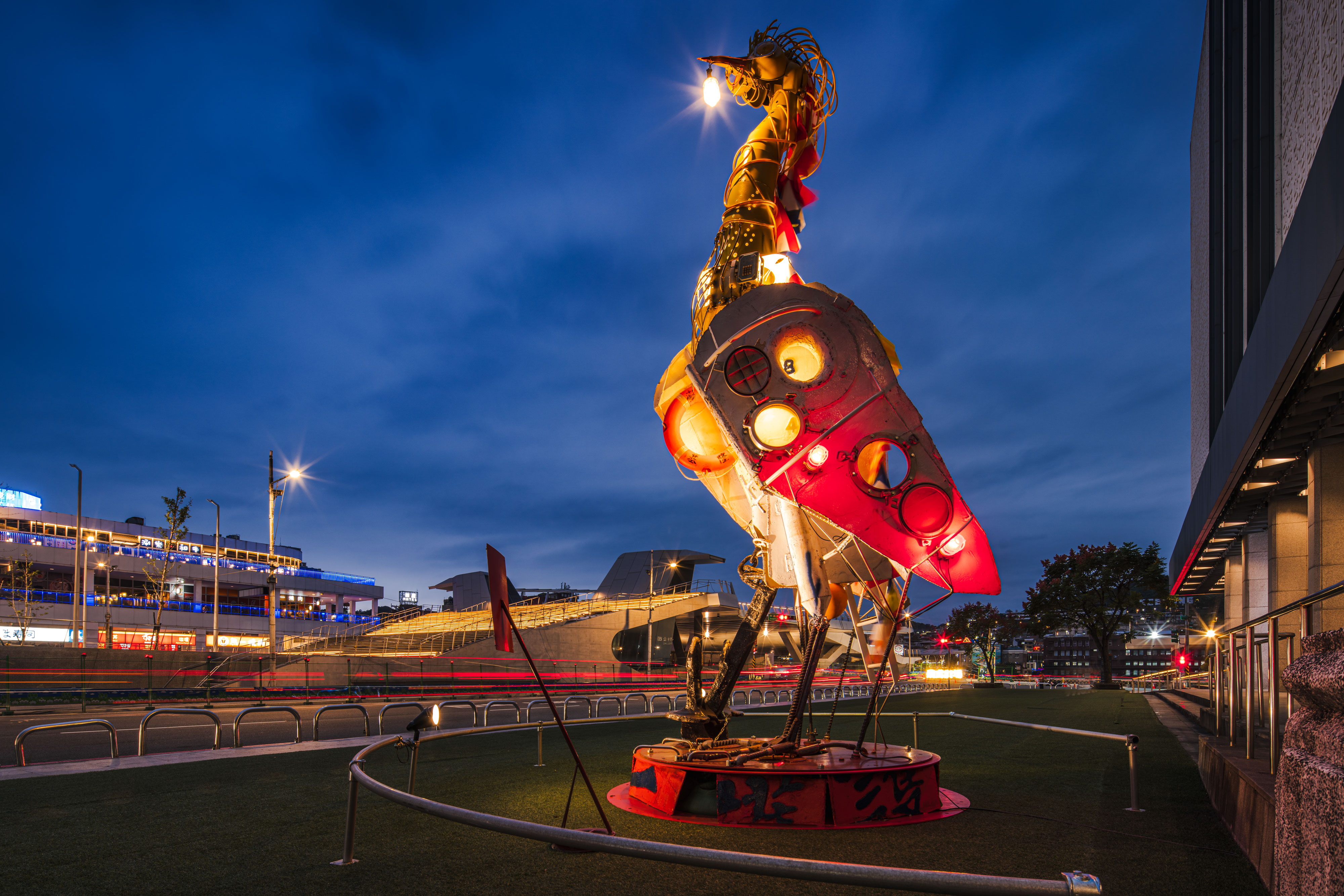
李承亮《巡護黃頭鷺一號》
生長於基隆的李承亮回到熟悉的港口城市,從田寮溪畔常見的黃頭鷺出發展開現地創作。棲息於潮汐、河岸與港區之間的黃頭鷺,長久觀看船隻靠岸與離港,也伴隨城市在海風、雨水與產業變遷中持續改變,成為連結地方生態與港口生活的日常身影。
作品以退役船艦拆解後的鋼板、船窗、五金零件與錨鏈等材料組構黃頭鷺的形象,保留鏽蝕、焊接與航行留下的物質痕跡。曾經穿越海洋的船體在此重新化為鳥的羽翼與身體,使航海與飛行、工業與自然、海洋與陸地的記憶彼此交疊。
結合李承亮擅長的的大型裝置與空間構成,港口透過物質材料被重塑為身體感知的場域。當船重新化為鳥,黃頭鷺也彷彿成為穿越時間的見證者,在潮汐、航路與城市變遷之間,重新召喚基隆持續流動的海洋記憶。
Li Cheng-Liang, Patrol Egret No. 1
Li Cheng-Liang, who grew up in Keelung, returns to this familiar port city and begins his site-specific work with the eastern cattle egret, a bird commonly seen along Tianliao Creek. Living between the tides, the riverbank, and the harbor, the egret has long watched ships come in and leave port, changing alongside the city through sea winds, rain, and industrial transformation, and becoming a familiar figure linking local ecology to daily life at the port.
The work builds the form of the egret from steel plate, ship windows, hardware fittings, and anchor chain salvaged from decommissioned vessels, preserving the rust, welds, and material traces left by their time at sea. A ship's hull that once crossed the ocean is here transformed anew into a bird's wings and body, letting the memories of seafaring and flight, industry and nature, sea and land, overlap one another.
Combined with the large-scale installation and spatial construction Li is known for, the port is reshaped, through material, into a field of bodily perception. As the ship becomes bird, the egret seems to become a witness crossing through time, summoning Keelung's continually flowing maritime memory amid the tides, the shipping routes, and the changing city.
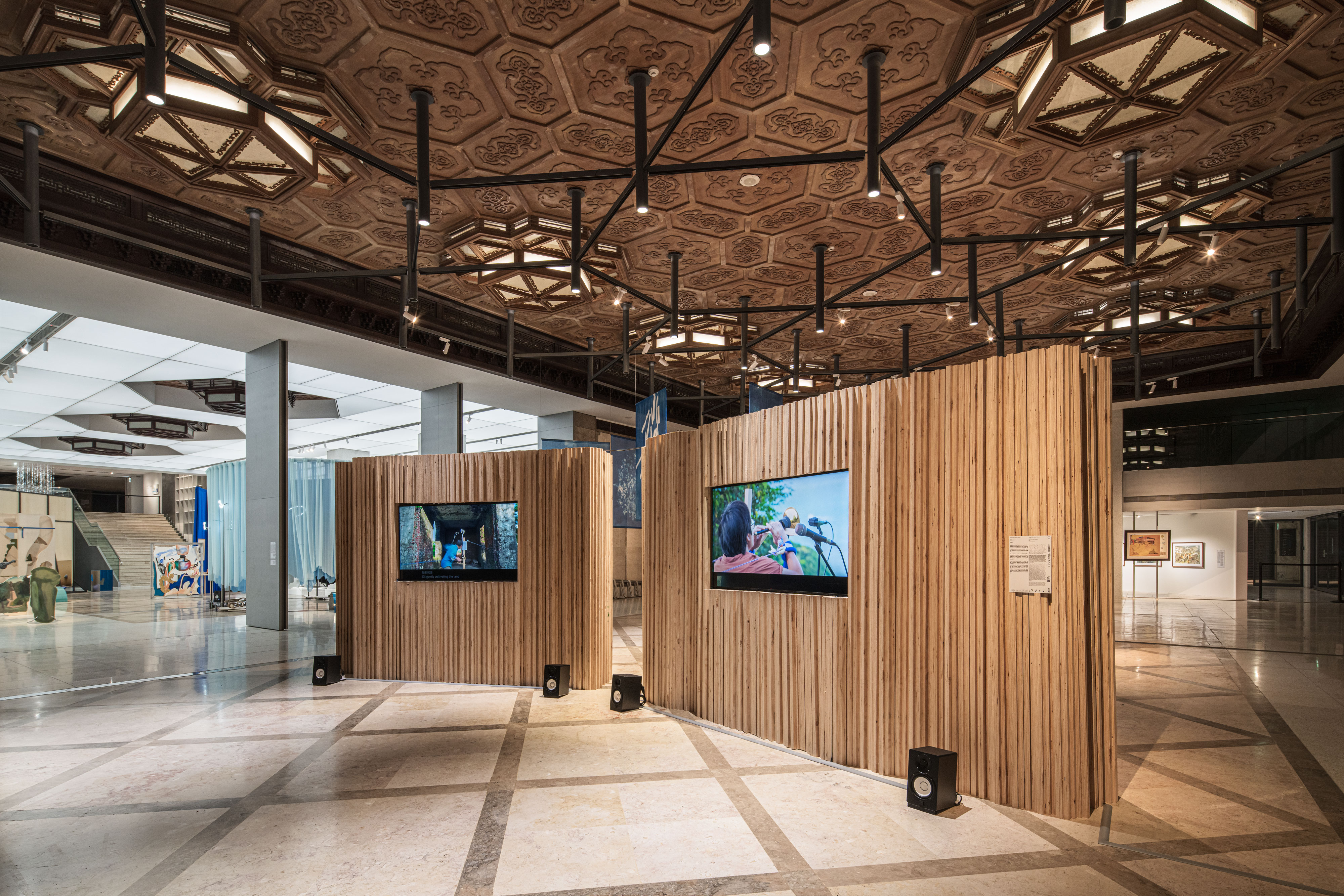
加藤翼 《 Songs While Bound: Taiwan 》
加藤翼長期以集體行動與合奏作為創作方法,透過繩索將參與者連結於同一結構。表演者彼此合作發聲,也持續受到他人的動作牽制,個人的節奏與選擇因而與群體相互影響,使合作、差異與相互依存成為可被感受的社會關係。
《Songs While Bound: Taiwan》邀請在地音樂人與樂器演奏者共同參與,選取具有文化與歷史意涵的歌曲,透過不同聲部、樂器與混音,使聲音彼此重疊、干擾與回應,在合奏中呈現關係的張力。
作品於基隆槓子寮砲台拍攝。二十世紀初,基隆一方面隨築港、鐵路與市街建設逐步邁向現代港灣城市,另一方面也因日俄戰爭與日本帝國的軍事部署,被納入更廣大的東亞地緣關係。港口帶來船舶、貨物與人口,也讓不同族群、語言與文化在此相遇,其間的合作、競爭與磨合,至今仍以各種形式迴響於港都。繩索既是連結也是牽制,交織的聲音則讓這些複雜關係,在曾經面向海洋的軍事空間中再次被聽見。
Tsubasa Kato, Songs While Bound: Taiwan
Kato has long used collective action and ensemble performance as his method, connecting participants to a single structure by rope. The performers cooperate to produce sound while also being continually pulled by one another's movements; individual rhythm and choice thus become entangled with the group, making cooperation, difference, and interdependence into social relationships that can be felt directly.
Songs While Bound: Taiwan brings together local musicians and instrumentalists, selecting songs with cultural and historical significance; through different vocal and instrumental parts and mixing, the sounds overlap, interfere with, and respond to one another, presenting the tension of relationship within the ensemble.
The work was filmed at Gangziliao Fort in Keelung. In the early twentieth century, Keelung moved toward becoming a modern port city through harbor construction, railways, and street development, while also being drawn into a wider East Asian geopolitical order through the Russo-Japanese War and Japanese imperial military deployment. The port brought ships, goods, and population, bringing different ethnic groups, languages, and cultures into contact; the cooperation, competition, and friction among them still echo through the port city today, in various forms. The rope is both connection and restraint, and the interwoven sound lets these complex relationships be heard again within a military space that once faced the sea.
Cristina Lucas 《 Unending Lightning 》
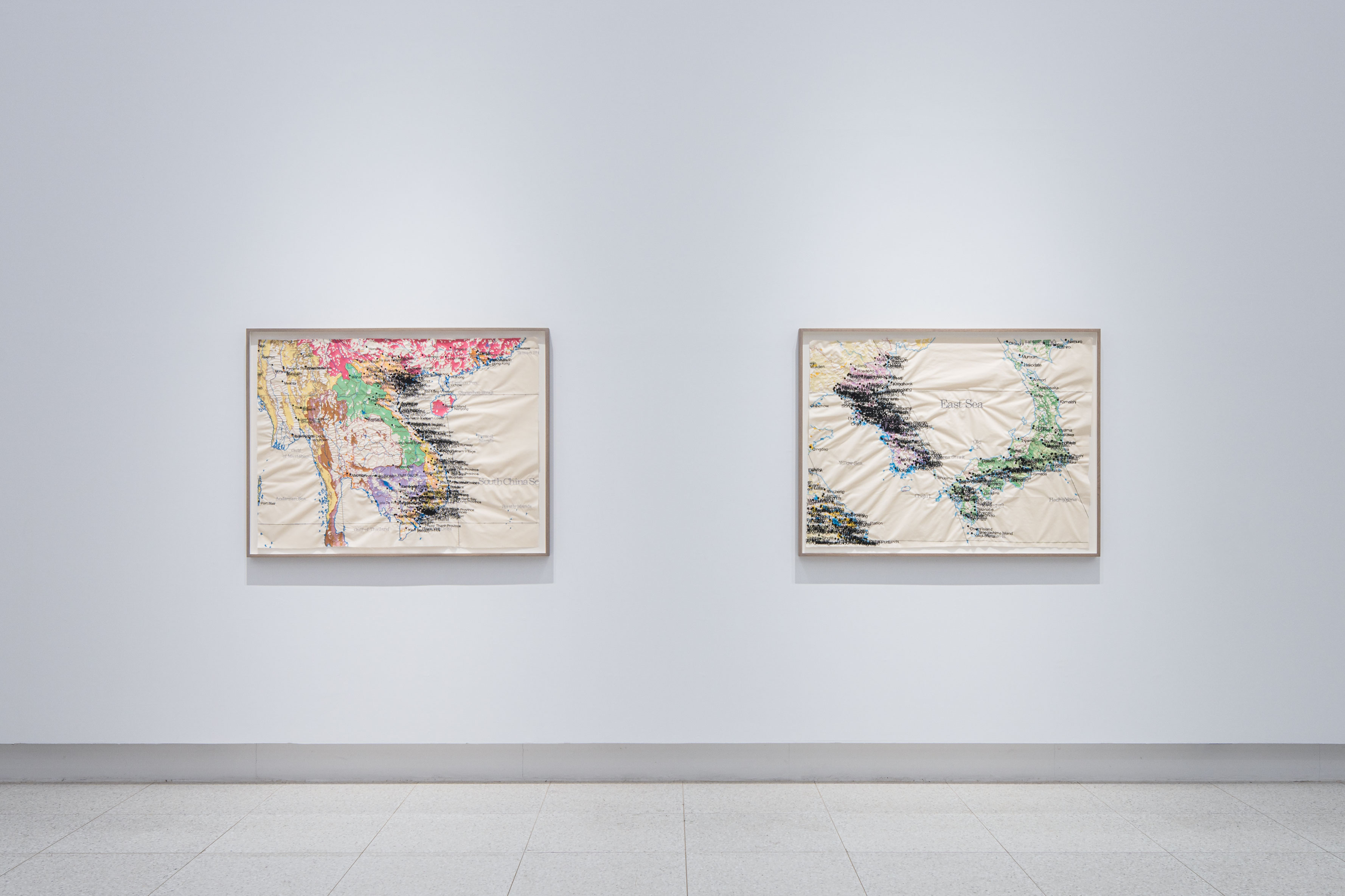
Cristina Lucas 長期以跨媒材創作探討政治、歷史、權力與全球化。《Tufting》系列源自其持續進行的《Unending Lightning》研究計畫,將二十世紀以來針對平民目標的空襲資料轉化為刺繡地圖。畫面中的黑色斑點標示遭受暴力攻擊的區域,城市名稱則以黑線刺繡,使戰爭資料從統計與地圖轉化為具有觸感與時間性的物質表面。
本展選出《Tufting: Korea and Japan 1953》與《Tufting: Vietnam 1975》,分別指向韓戰與越戰所留下的區域記憶。兩件作品將不同戰爭的地理範圍並置,也把東亞與東南亞納入同一條空襲、冷戰與現代戰爭技術的歷史線索。
刺繡在此成為重新觀看暴力的方法。柔軟的織物承載密集的轟炸資訊,細密針線與黑色斑點之間形成強烈反差。海洋與國界不再只是地圖上的邊線,而與軍事航線、空中攻擊及地緣政治彼此交疊,使戰爭留下的痕跡重新進入當代觀看。
Cristina Lucas, The Tufting Series
Cristina Lucas has long worked across media to examine politics, history, power, and globalization. The Tufting series grows out of her ongoing research project Unending Lightning, which translates data on twentieth-century aerial bombardments of civilian targets into embroidered maps. Black dots mark the areas that came under violent attack, while the names of the cities are stitched in black thread, turning wartime data from statistics and maps into a tactile, time-bound material surface.
This exhibition presents Tufting: Korea and Japan 1953 and Tufting: Vietnam 1975, which point respectively to the regional memories left by the Korean War and the Vietnam War. The two works juxtapose the geographic scope of different wars, drawing East Asia and Southeast Asia into a single historical thread of aerial bombing, the Cold War, and modern military technology.
Here, embroidery becomes a way of looking anew at violence. The soft fabric carries dense bombing data, and a sharp contrast forms between the fine stitching and the black dots. Oceans and borders are no longer just lines on a map; they overlap with military flight paths, air strikes, and geopolitics, bringing the traces left by war back into contemporary view.
張庭甄《一片視圖,一片試圖》
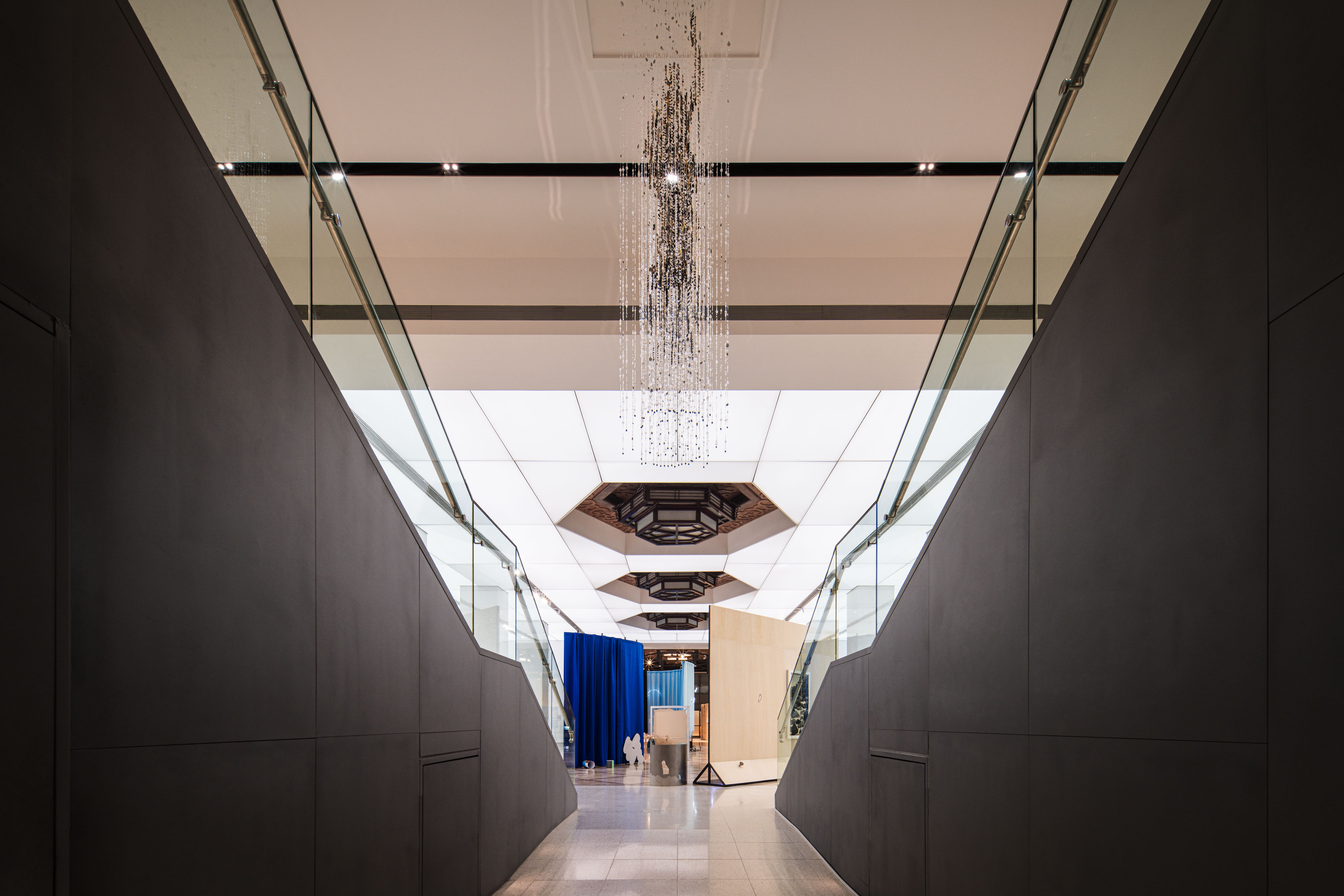
張庭甄長期關注檔案、影像與空間之間的關係。本次作品從基隆美術館兩側階梯與中央過道形成的透視軸線出發,藝術家測得其方位角,並將「337°—157°」延伸為環繞地球的大圓弧線,使基隆與沿線不同地域的殖民、遷徙與身分歷史產生連結。
「點」與「投影」成為作品的核心方法。藝術家以1934年鮫島臺器贈予基隆公會堂、其後下落不明的《女神像》為線索,將現存報紙影像放大後形成的網點,轉化為圓柱形珠簾;觀者必須移動至特定位置,散落的點才會重新聚合為女神的輪廓。玻璃貼膜則將大圓弧線遠方的地景投影於展場,與窗外基隆街景疊合,異地與過去的聲音亦散布於空間。
港口與海洋的意象由此被轉化為觀看的方法:作品如同航線上的停靠點,各自承載不同的歷史、地景與聲音;由作品觸發的記憶、想像與感知,則如投影般於觀者移動的當下短暫成形。張庭甄以「辨位」閱讀歷史,使每一次停留成為重新確認位置的過程,也讓基隆成為連結不同時間與海域的觀看起點。
Chang Ting-Chen, Through Sight and Site
Chang Ting-Chen has long been concerned with the relationships among archives, images, and space. This work begins with the axis of perspective formed by the staircases on either side and the central corridor of the Keelung Art Museum. The artist measured its bearing and extended "337°–157°" into a great-circle arc running around the earth, linking Keelung to histories of colonization, migration, and identity across the different regions the line passes through.
"Points" and "projection" become the work's core method. Taking as her lead The Goddess, a statue Samejima Taiki gave to Keelung Public Hall in 1934 and whose whereabouts have since been unknown, the artist enlarges the sole surviving newspaper image of the statue and translates its halftone dots into a cylindrical bead curtain; viewers must move to a particular position for the scattered points to reassemble into the goddess's outline. The frosted glass film projects landscapes from far along the great-circle line into the exhibition space, overlapping them with the Keelung streetscape visible through the window, while sounds from distant places and past times are dispersed through the space as well.
The imagery of the port and the sea is thus transformed into a method of looking: the works function like ports of call along a shipping route, each carrying its own history, landscape, and sound; the memory, imagination, and perception triggered by the work take shape only briefly, like a projection, as the viewer moves. Chang reads history through "positioning," turning every pause into an act of re-locating oneself, and making Keelung a starting point for viewing that connects different times and different seas.
艾格妮絲・埃松蒂《西班牙殖民盛宴》
艾格妮絲・埃松蒂的創作關注非裔離散經驗、去殖民知識、生態政治與照護實踐之間的交會,經常透過研究、儀式性行動與共同聚集,重新思考身體、土地、飲食與記憶如何成為政治與文化生成的場域。
《西班牙殖民盛宴》源自艾格妮絲・埃松蒂在台灣為期三週的駐村經驗。駐村期間,她前往基隆暖東峽谷旁的拉波波村,學習傳統藍染與蠟染工藝,以「布料承載記憶」呼應她一貫的「食物承載記憶」提問。
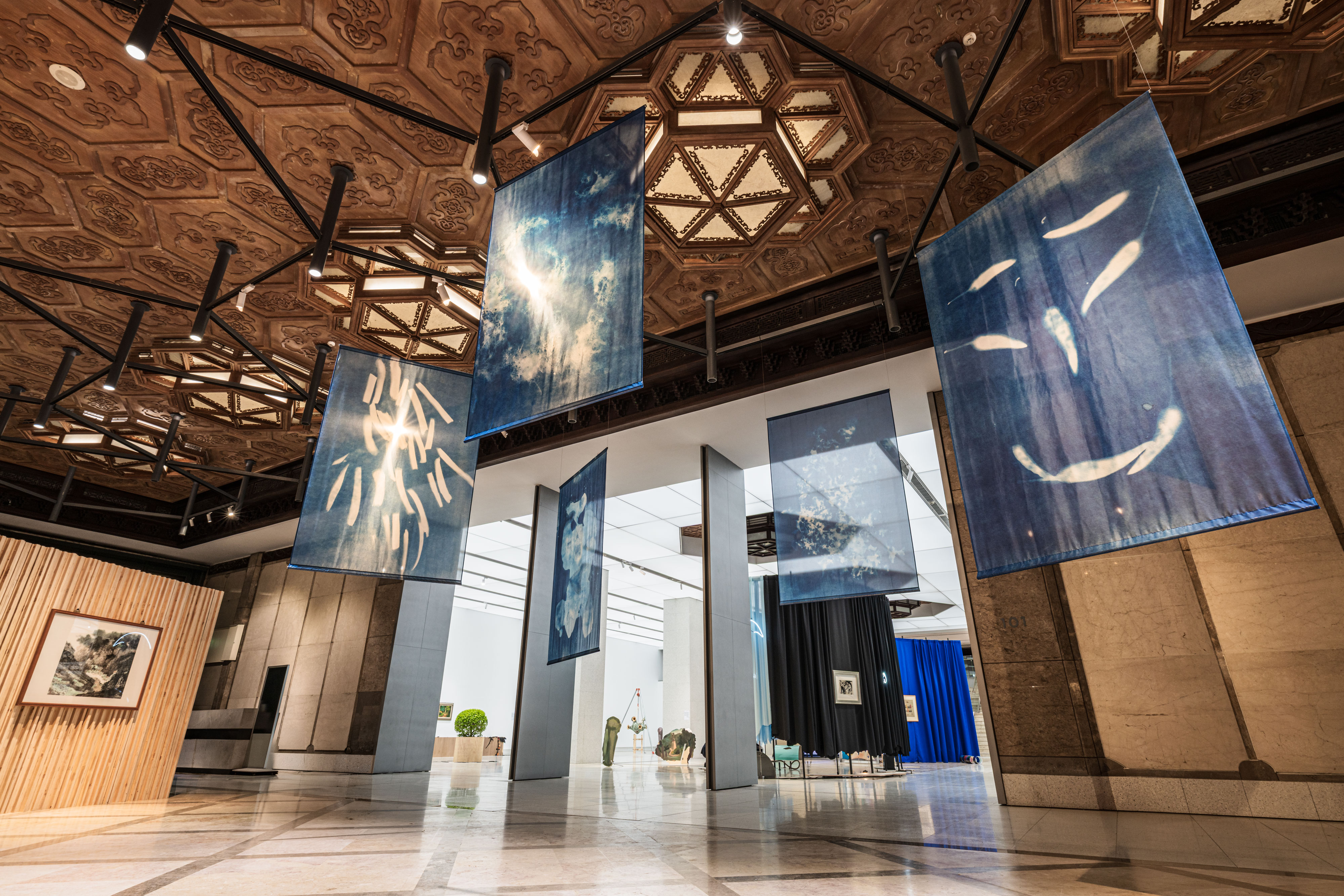
作品影像來自 CirCurate 主辦的民眾共創工作坊,參與者在喀麥隆飲食諺語的引導下共同完成藍曬影像——okok 葉片靜置一夜後滋味更醇厚,也提醒著記憶同樣需要時間才能深化。透過這項共同創作,作品邀請觀者思考:我們用什麼樣的食物講述自身的故事?又該如何共同想像一個更具包容性、也更加「有滋有味」的世界?
Agnes Essonti Luque, A Feast for Spanish Colonizers
Agnes Essonti Luque's practice engages with the intersections of Afrodiasporic experience, decolonial knowledge, ecopolitics, and practices of care, often working through research, ritualized action, and collective gathering to rethink how the body, land, food, and memory can become sites of political and cultural formation.
A Feast for Spanish Colonizers grows out of Luque's three-week residency in Taiwan, during which she visited Lapopo, a village near Keelung's Nuandong Gorge, to learn traditional indigo dyeing and batik, letting "cloth as a carrier of memory" answer her ongoing inquiry into "food as a carrier of memory."
The work's images come from a public co-creation workshop hosted by CirCurate, where participants made cyanotypes together, guided by a Cameroonian culinary proverb: okok leaves taste richer after resting overnight, a reminder that memory, too, deepens with time. Through this shared practice, the work asks what foods tell the story of who we are, and how we might imagine a world that is more inclusive, and more richly flavored.